Wildlife
The Glen Affric pines that were ten years old and three inches tall
In 1948 there were hardly any young Scots pines left in Glen Affric. The seedlings were there all along, bitten to the ground. What a deer fence showed, and why fewer fences is now the aim.
Wildlife
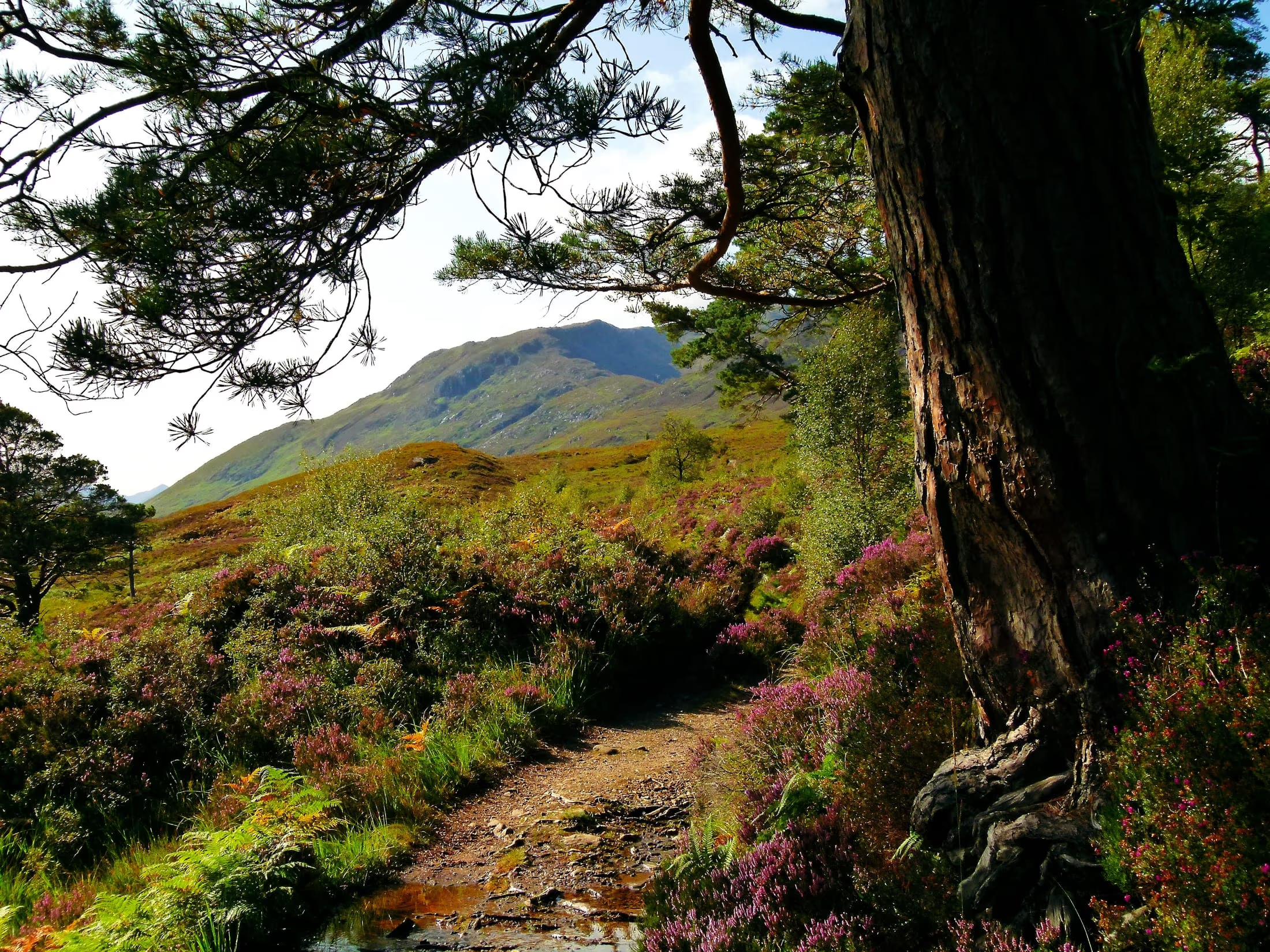
When the Forestry Commission bought the bulk of Glen Affric in 1948, it found very few Scots pines in the glen under a hundred years old. That is Forestry and Land Scotland’s own account, and the cause it gives is just as plain: unchecked deer browsing.
Think about what that means for a pinewood. The old trees were still standing, so from the road the glen looked like a forest. But a forest whose youngest trees are a century old is not a forest that is carrying on. It is one that is running out.
The seedlings were already there
The most telling evidence for this comes from a fence rather than a planting.
In September 1990 Trees for Life finished a 50-hectare deer exclosure at Coille Ruigh na Cuileige in Glen Affric. A student study then counted what was already on the ground inside it. There were an estimated 100,000 Scots pine seedlings. Their average age was 9.9 years. Their average height was 8.5 centimetres — about three inches. Ninety-five per cent of them had grazing damage, and some were twenty-seven years old and still only a few centimetres tall.
So nothing was planted there. The fence went up and nobody did anything else, and by September 2015, Trees for Life reports, some of those pines were taller than the dead trees that had been standing over them when the first photographs were taken. The dead trees themselves had barely changed, which is its own small lesson: a skeleton pine can stand for decades, so a glen can go on looking wooded for a long time after it has stopped renewing itself.
Trees for Life’s page does not say exactly where in the glen the exclosure sits, and we are not going to guess.
What the Commission did, and then undid
The 1948 purchase was not a simple conservation story, and Forestry and Land Scotland does not tell it as one. Millions of young trees grown from local Scots pine seed went into fenced pinewood reserves. But in the 1950s lodgepole pine and Sitka spruce were planted as well, because the post-war job was to put tree cover back on the country as fast as possible.
Within twenty years that policy was reversed, and the non-native trees have been taken out of the key areas since. As of June 2025 Forestry and Land Scotland expected the core pinewood to be clear of non-native species within the next decade. It is not finished, and the people doing it say so.
The pinewood is not only pine, either. Birch, rowan, aspen, willow and alder all grow in it, along with lichens that are nationally rare or scarce. In October the birch is what you notice first, because it turns and the pine does not.
Why the fences are now the problem
The fences worked. They also kill birds.
Black grouse and capercaillie fly low when they are startled, and they often do not see a fence until they hit it. Forest Research’s 2012 guidance calls fence collisions a significant source of mortality for both. Trees for Life now takes its own fences down once they have done their job, and points to the RSPB’s Corrimony reserve near Glen Affric, where black grouse numbers rose after tall deer fences were taken down or cut to stock height with an electric line beyond.
That is why the approach in Glen Affric has shifted from keeping deer out of the trees to keeping deer numbers down across the glen, so that the trees can come back without a wire round them.
In November 2025 the Glen Affric National Nature Reserve — 17,604 hectares of it — joined Affric Highlands, a partnership of landowners working across more than 200,000 hectares of the central Highlands. The same announcement put the Caledonian forest at less than two per cent of its original extent. Glen Affric is one of the larger pieces of what is left, and most of what makes it worth the thirty miles of dead-end road is younger than it looks.
What you can and cannot expect to see
You can see the pinewood, and with this history in your head you can see the shape of it: old pines standing among the younger trees that came up once the browsing eased.
Forestry and Land Scotland lists golden eagles, mountain hares and red deer among the glen’s wildlife. We will tell you if one is in view. We will not promise one, and a capercaillie or a black grouse we will not even suggest.
Everything above is from the sources linked below, as they stood when this was written.
Where this came from
- Forestry and Land Scotland — Glen Affric: 75 years of restoration (26 June 2025)
- Trees for Life — Coille Ruigh na Cuileige, 25 years of regeneration
- Trees for Life — fence removal
- Forest Research — fence marking to reduce grouse collisions (1 December 2012)
- Scotland’s Rural Network — Glen Affric joins Affric Highlands (November 2025)
- Wikipedia — Glen Affric
Conditions in the Highlands change quickly, and a road that was open when this was written may not be today. Check the source before you plan around anything here — or ask us, because we will be driving it.
Days this touches