The season
The rut is starting, and you will hear it long before you see it
Red deer stags start roaring in the glens from late September. Here is what is actually audible, where the sound carries best on our routes, and the thing nobody tells visitors about the first three weeks of October.
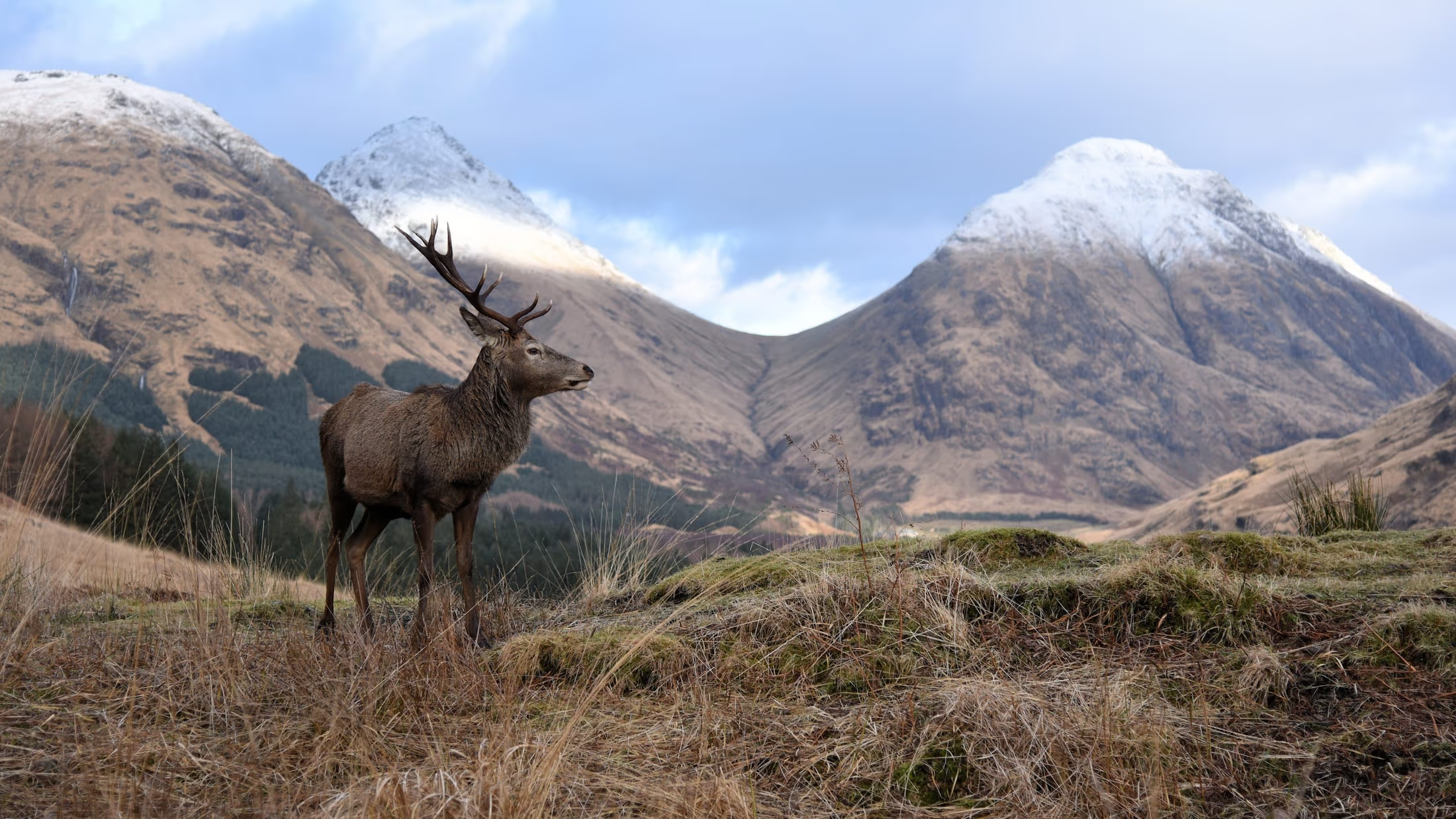
The season
The rut runs from September to November, and stags can be heard roaring from late September onwards. That is NatureScot’s wording, and the vagueness in it is honest rather than lazy — it starts when it starts, and it varies by glen and by year.
What it means in practice is that from about now until the clocks have been back a while, the noise in the hills changes. A rutting stag’s roar is not a call you have to strain for. It carries, and on a still morning in a glen with steep sides it arrives from somewhere you cannot identify and sounds considerably larger than the animal producing it.
You will hear more than you see
This is the part worth setting expectations on, because the photographs everybody has seen — two stags locked together, mud to the shoulder, steam off their backs — are the end of a process rather than the normal state of it.
Most of the rut is posturing. Stags roar at each other, walk in parallel, and wallow in peat to plaster their coats and antlers and carry the smell further. The Cairngorms National Park Authority’s description is the accurate one: noisy clashes of antlers happen, and so does the roaring that can be heard far and wide, but a challenger usually decides against it long before contact.
So a good rut morning is mostly an audible event with deer visible at distance, and that is genuinely worth being out for. A fight at close range is luck. We do not plan a day around getting one, and anybody quoting you a price on the basis that you will see one is selling you something.
Where the sound sits on our routes
Two of the days run straight through good ground for this.
Glen Etive is the obvious one. Twelve miles of single track down a dead end means almost no traffic, which means almost no engine noise, which is the whole requirement — the roar is not quiet, but it competes badly with a road. There are deer on the hillsides down most of that glen, and at the head of it the Kingshouse has red deer around the building most days of the year, rut or no rut, because they have worked out that people are soft.
Beinn Eighe, on the Wester Ross day, is named by NatureScot specifically as the reserve in the west where stags can be heard roaring — alongside Ben Wyvis in the north, Mar Lodge in the east and Rum out in the Hebrides. The pinewood and the open hill behind it are exactly the right ground.
The car helps here more than it does anywhere else on the calendar. An electric drivetrain at a standstill makes no noise at all, so you can sit in a passing place with the windows down and listen, which is not an option in something idling.
The thing nobody tells visitors about October
The first three weeks of October are the busiest period of the year for stag stalking. That is the Scottish Outdoor Access Code’s own assessment, and it falls directly on top of the best of the rut.
Since 2023 male deer may be stalked all year in Scotland, though most stag stalking still happens between July and mid-October with activity building through the autumn. Hind stalking then runs from 21 October to 15 February.
None of this affects a day spent driving and stopping at viewpoints and laybys — it matters if you intend to walk. If you are planning to go up onto open hill in October, on one of our days or on your own, check the Heading for the Scottish Hills service first to find out where stalking is happening, and read the signage when you arrive. It is a two-minute job and it is the difference between being welcome on a hill and being a problem on it.
For what it is worth, this is also the honest context for the numbers. There are an estimated one million wild deer in Scotland, up from around half a million in 1990 — that is the Scottish Government’s figure from January 2024, and it covers all four species rather than red deer alone. The management that comes with those numbers is not an inconvenience laid on top of the landscape. It is part of why the landscape looks the way it does.
Keep your distance, and mean it
NatureScot’s advice for the rut is blunt: stags are full of testosterone, can be aggressive, and keeping a distance is advised.
That is worth taking seriously in exactly the places where it is easiest not to — the Kingshouse car park, a layby on the A82, anywhere deer have got used to people. A stag standing calmly six feet from a picnic table in July is a different animal in October. Stay in or beside the car, use whatever lens you have, and do not walk towards one to improve the shot.
Everything above is what we know at the time of writing. The rut moves about by a fortnight either way depending on the weather and the year, and the only reliable way to know what a particular week is doing is to be out in it.
Where this came from
- NatureScot — autumn wildlife, and where stags can be heard roaring
- Cairngorms National Park Authority — red deer and roe deer
- Scottish Outdoor Access Code — deer management and access
- Scottish Government — managing deer numbers for nature and climate (5 January 2024)
Conditions in the Highlands change quickly, and a road that was open when this was written may not be today. Check the source before you plan around anything here — or ask us, because we will be driving it.
Days this touches